B2B Conversion Rate Optimization: Using content automation to Drive sales-ready leads
B2B buyers are moving faster, but your content creation process isn't keeping up. While sales teams wait for marketing to produce enablement materials, prospects are researching competitors on their own timeline. The result? Missed conversions, longer sales cycles, and qualified leads slipping through cracks.
Here's the challenge: Traditional B2B conversion rate optimization requires coordinating multiple teams, creating personalized content for different buyer personas, and refreshing that content constantly as market conditions shift. Most organizations lack the bandwidth to do this at scale—so they settle for a handful of static case studies and generic landing pages.
What if your conversion optimization strategy could run on autopilot?
Content automation platforms are fundamentally changing how B2B teams approach CRO. Instead of manually writing, publishing, and maintaining sales enablement content, you can now deploy systems that generate fact-checked, research-backed materials automatically—then monitor their performance and refresh them when engagement drops. This isn't about replacing your team; it's about giving them back the hours spent on repetitive tasks so they can focus on strategy.
In this guide, we'll break down the core principles of B2B conversion rate optimization, show you how content automation accelerates lead generation, and reveal the specific tactics that drive more sales-ready prospects to your sales team.
TL;DR: B2B conversion rate optimization requires persistent, multi-stage content aligned with longer sales cycles and multiple decision-makers. Content automation platforms streamline creation, personalization, and maintenance of sales enablement materials—fact-checking claims, tracking performance, and refreshing declining content automatically. Teams using automated content workflows see faster lead qualification, better alignment between marketing and sales, and compounding traffic gains over time.
Table of Contents
- What Is B2B Conversion Rate Optimization?
- Why Standard CRO Tactics Fail in B2B
- How Content Automation Improves Conversion Rates
- Building a Sales Enablement Content Engine
- Content Automation for Every Stage of the B2B Buyer Journey
- Measuring and Optimizing Your Conversion Performance
- How Pentra Automates Your Entire CRO Workflow
- FAQ: Common B2B CRO Questions
- Key Takeaways
What Is B2B Conversion Rate Optimization?
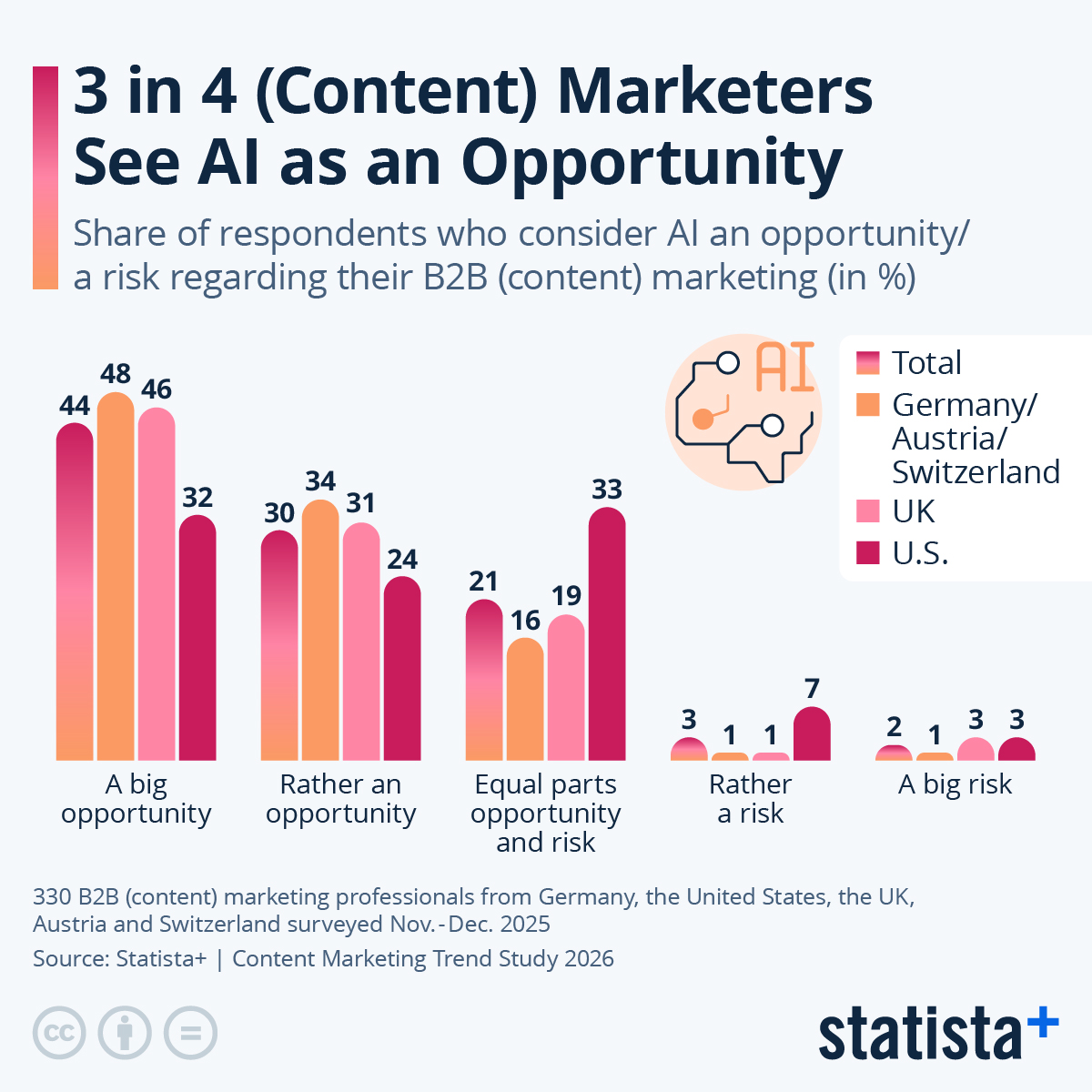
B2B conversion rate optimization (CRO) is the process of increasing the percentage of website visitors who complete a desired action—signing up for a product demo, requesting a consultation, downloading a resource, or entering a trial. Unlike B2C conversion optimization, which often targets impulse decisions, B2B CRO must account for longer sales cycles, multiple decision-makers, and higher deal complexity [1].
In B2B environments, a "conversion" isn't always a purchase. It's often a qualified lead handoff to sales. Your conversion goal might be: "Get prospects to book a 20-minute discovery call" or "Drive product trial signups from relevant industries." The key is alignment—your content, landing pages, and CTAs must all guide prospects toward that specific action.
Why this matters: The average B2B sales cycle spans 3–6 months or longer. A prospect visiting your site today may not be ready to buy for weeks or months. If your conversion strategy only focuses on immediate sign-ups, you'll miss 80% of your addressable market. Effective B2B CRO builds pathways for prospects at every stage of awareness and consideration.
 Source: Statista
Process overview for b2b conversion rate optimization
Why Standard CRO Tactics Fail in B2B
Most B2B teams try to copy B2C conversion strategies—aggressive pop-ups, urgent countdown timers, hard-sell copy. These tactics backfire when your audience is a risk-averse procurement manager evaluating a $50K+ software contract.
The core problems with generic CRO in B2B:
-
Longer decision timelines require persistent content. A visitor landing on your pricing page today may not convert for 8 weeks. Static landing pages don't capture their attention over that full window. You need ongoing touchpoints—educational content, case studies, webinars, thought leadership—that stay relevant throughout their research phase.
-
Multiple decision-makers demand different content. The CFO needs ROI metrics. The engineering director wants technical specifications. The operations manager cares about implementation timelines. One generic product page doesn't serve all three. You need specialized content for each role and department.
-
Content decay kills conversions. That case study you published six months ago? It's outdated. The benchmark data is stale. The client references have moved on. Meanwhile, a prospect reading it sees old information and loses confidence. B2B CRO requires constant content refreshing and data verification.
-
Manual content creation doesn't scale. Creating personalized assets for each persona, each industry vertical, and each stage of the buyer journey manually is prohibitively expensive. Most teams create 5–10 key assets and hope they work for everyone. Coverage gaps emerge, and conversion rates plateau.
-
Sales and marketing misalignment wastes leads. Marketing generates a lead, but sales says "This person isn't sales-ready. They need more education." So that lead disappears into a black hole. Effective B2B CRO requires content that moves prospects from marketing-qualified to sales-qualified status—and that requires integrated planning.
How Content Automation Improves Conversion Rates
Content automation platforms solve these B2B CRO challenges by handling the repetitive, time-consuming parts of content strategy—so your team can focus on creative and strategic decisions.
Here's how automation directly improves conversions:
1. Persistent, Multi-Stage Content Coverage
Automated content systems crawl your website, identify content gaps, and generate articles targeting keywords across the entire buyer journey—awareness, consideration, and decision stages. Instead of manually mapping out 50+ topics, the system detects what's missing and proposes content that bridges those gaps. This ensures prospects have relevant, stage-appropriate content available whenever they land on your site, regardless of where they are in their buying cycle [2].
2. Fact-Checked, Research-Backed Claims
B2B buyers are skeptical. They cross-reference statistics, validate claims, and check credentials. AI-generated content that includes hallucinated data destroys credibility instantly. Modern content automation platforms use live web research to back every claim, then run separate fact-checking passes with per-claim confidence scores. The result: Sales-ready leads that trust your positioning because your content is provably accurate [3].
3. Rapid Personalization at Scale
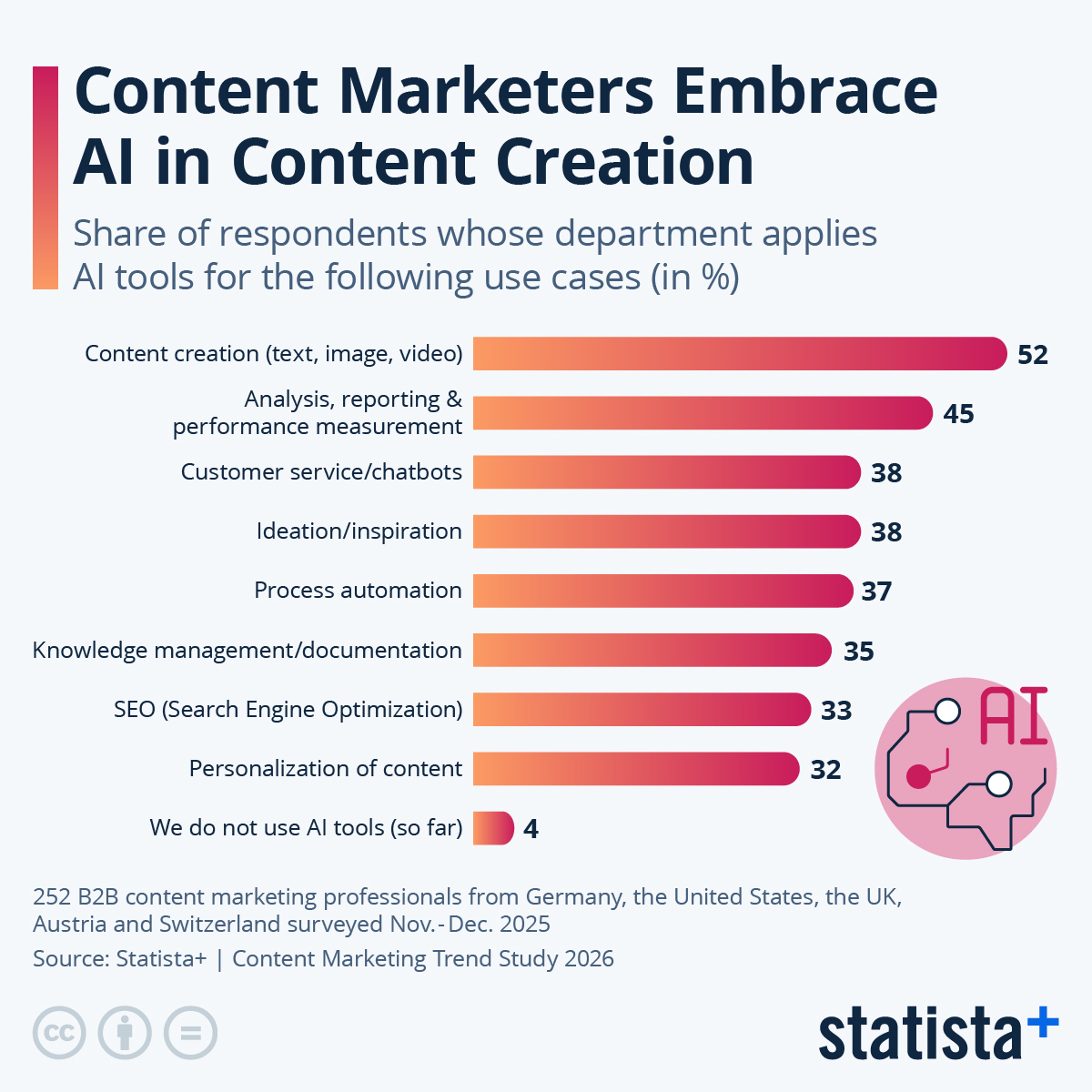
Automation systems can generate industry-specific versions of the same core article in minutes—not weeks. One foundational article on "How to Reduce Operational Costs" becomes versions for SaaS, manufacturing, retail, and financial services. Each version includes industry-relevant examples, metrics, and case studies. This hyper-relevant content converts better because it speaks directly to each audience's pain points.
4. Continuous Content Refresh Without Manual Work
The system monitors which content is declining in rankings, which pieces are losing engagement, and which claims are becoming outdated. When decay is detected, it automatically refreshes the content with fresh research and republishes—keeping conversion rates stable even as search algorithms and market conditions shift [4].
5. Integrated Sales Enablement Materials
Content automation can generate not just blog articles, but also sales enablement collateral—one-pagers, competitive battle cards, ROI calculators, case study templates. These materials are versioned by industry, company size, and decision-maker role. Sales teams get the exact asset they need for each prospect, instantly.
6. Real-Time Performance Monitoring
Pentra integrates with Google Search Console and internal analytics to track which content drives conversions, which keywords attract your ideal customer profile (ICP), and which articles are "striking distance" keywords—ranking 11-20 but ripe for quick optimization. You see conversion data per article, per keyword, per page type. This data-driven feedback loop lets you double-down on what works and fix what doesn't [5].
 Source: Statista
Building a Sales Enablement Content Engine
Sales enablement is where content automation has the biggest immediate impact on B2B conversion rates. Sales enablement content includes case studies, comparison charts, ROI calculators, pitch decks, one-pagers, and technical deep-dives—materials designed to move a prospect from "interested" to "ready to buy." [6]
The traditional sales enablement process:
- Marketing creates a case study (2-3 weeks)
- Sales reviews and suggests edits (1 week)
- Marketing revises (1 week)
- Someone designs a PDF or web version (1 week)
- The material gets uploaded to a sales portal that half the team doesn't know exists
- Three months later, the case study becomes outdated and no one updates it
The automated sales enablement process:
- You feed the content engine a customer win, market segment, and target persona
- The system researches competitive positioning, pulls relevant metrics, and generates 3–4 variations of the asset (ROI-focused, technical, timeline-focused)
- Each variation is fact-checked and formatted
- Assets are automatically distributed to Pentra, Slack, and sales portal with proper versioning
- Performance is tracked—which assets get opened, which convert best, which are outdated
- The system flags underperforming assets and suggests refreshes based on new market data
Specific sales enablement assets you can automate:
- Case studies – Targeted by industry, company size, and use case. Auto-generated from customer data with metrics, timeline, and ROI validation.
- Competitive positioning – One-pagers and battle cards comparing your solution to alternatives. Updated automatically as competitors change pricing or features.
- Buyer education – Guides and whitepapers explaining your buyer's core problem and why it matters. Structured to move readers from problem awareness to solution evaluation.
- Technical deep-dives – Documentation and architecture guides for technical buyers. Generated with citations to authoritative sources.
- ROI calculators – Interactive tools showing payback period, cost savings, and efficiency gains. Calibrated to real customer data.
- Persona-specific resources – Different versions of the same guide for CFO, CTO, ops manager, etc. Each emphasizes metrics and benefits relevant to that role.
When sales enablement content is generated automatically, kept up-to-date, and distributed instantly to the right team members, conversion rates accelerate because:
- Sales closes deals faster (they have answers immediately, not "I'll get back to you")
- Prospects get consistent, professional information (no outdated PDFs or conflicting claims)
- Marketing learns which assets work (tracking shows which collateral wins deals)
- Sales and marketing align (both use the same, continuously updated source of truth)
Content Automation for Every Stage of the B2B Buyer Journey
B2B conversion optimization requires different content at each stage. Content automation ensures you have comprehensive coverage across all three:
Awareness Stage: Educational Content That Attracts
At the top of the funnel, prospects don't yet realize they have a problem—or they're just beginning to research. Educational content here should be informative, unbiased, and focused on building authority and trust.
Content automation generates:
- How-to guides and tutorials addressing common pain points
- Trend reports and industry benchmarks
- Explainer videos and interactive tools
- Thought leadership articles on emerging challenges
- Long-form guides covering the "what" and "why" before the "how"
Automation ensures this content is:
- Optimized for search (reaching prospects in research mode)
- Fact-checked with citations (building credibility)
- Updated regularly (staying current with industry shifts)
- Distributed across channels (LinkedIn, your blog, Medium)
Conversion metric at this stage: Page views, time on page, content downloads. You're measuring awareness and engagement, not immediate conversions.
Consideration Stage: Comparative and Solution-Focused Content
Now prospects know they have a problem and are evaluating solutions. Content here should help them understand different approaches, compare options, and see how your solution stacks up.
Content automation generates:
- Comparison guides ("Option A vs. Option B vs. Option C")
- Feature deep-dives and technical documentation
- Case studies showing similar prospects' results
- Webinars and demo walkthroughs
- ROI and cost-benefit analyses
- Competitive positioning guides
Automation ensures this content is:
- Personalized by industry and company size (a mid-market SaaS company sees different comparisons than an enterprise)
- Backed by real data and customer examples (not generic claims)
- Integrated into your sales workflow (sales can instantly share the right resource)
- Updated when competitors change or your value prop evolves
Conversion metric at this stage: Demo requests, trial signups, sales call bookings. You're moving prospects closer to purchase.
Decision Stage: Proof and Reassurance Content
Prospects have narrowed to you and 1–2 competitors. Content here should remove final objections, prove value, and make the decision easy.
Content automation generates:
- Case studies featuring prospects' exact industry and company size
- Customer testimonial videos
- Security, compliance, and implementation guides
- Pricing transparency documents
- Onboarding roadmaps
- Risk mitigation resources ("What if implementation takes longer?")
Automation ensures this content is:
- Highly relevant (showing customers similar to the prospect)
- Audit-ready (compliance and security docs with current certifications)
- Integrated into sales conversations (CRM-synced, easy to share)
- Continuously updated (customer wins are added automatically; outdated case studies are refreshed)
Conversion metric at this stage: Closed deals, customer lifetime value, average contract value. You're measuring revenue impact.
<div style="position:relative;padding-bottom:56.25%;height:0;overflow:hidden;margin:1.5em 0;border-radius:8px;"><iframe src="https://www.youtube.com/embed/Tvldi7uk-E8" style="position:absolute;top:0;left:0;width:100%;height:100%;border:0;" allowfullscreen></iframe></div>Measuring and Optimizing Your Conversion Performance
B2B CRO without measurement is guesswork. You need to track which content, landing pages, and offers convert best—and then scale what works.
Key B2B conversion metrics to track:
-
Conversion Rate by Content Type – Which assets drive the most sign-ups? Case studies? Webinars? Comparisons? Prioritize creating more of what converts.
-
Conversion Rate by Industry Vertical – Your SaaS-specific content might convert at 8%, while your manufacturing content converts at 3%. Double-down on high-converting verticals.
-
Cost Per Lead (CPL) by Content Source – Organic content from search costs far less than paid ads. Track which content pieces drive free leads, and automate more of that type.
-
Sales-Qualified Lead (SQL) Rate – Not all leads are equal. Track what percentage of marketing-qualified leads (MQLs) from each content piece become SQLs. Content that consistently moves prospects to sales-ready status deserves investment.
-
Time to Close by Content Engagement – Prospects who consumed your comparison guide before sales contact close faster and at higher ACV. Track engagement patterns and replicate them.
-
Content Decay Detection – Which articles are losing rankings? Which are still driving conversions? Automated systems flag content losing visibility so you can refresh it before conversions drop.
-
Attribution by Touchpoint – B2B deals involve multiple touchpoints. Did the prospect first engage with a blog post, then download a case study, then watch a demo? Track the full journey to understand which content moves the needle.
How content automation accelerates measurement:
Automated platforms integrate with Google Search Console, Pentra, and analytics tools. They pull conversion data directly into dashboards showing:
- Keywords that drive conversions (focus on these in content optimization)
- Content gaps causing drop-off (fill these with new articles)
- Underperforming content (mark for refresh or retirement)
- Striking distance keywords (target these for quick rank gains)
Instead of manually exporting data to spreadsheets, you see real-time conversion trends. This accelerates your optimization cycle from "analyze quarterly" to "optimize weekly." [7]
How Pentra Automates Your Entire CRO Workflow
Pentra is an AI-powered autonomous SEO content engine designed specifically for B2B teams that want to build a complete conversion optimization system without hiring additional staff. Here's how it directly addresses B2B CRO challenges:
Pentra — Pentra is an AI-powered autonomous SEO content engine that automates the entire content creation and management lifecycle
1. Autonomous Site Crawling & Niche Detection
Pentra crawls your website, analyzes your existing content, and detects your niche ("B2B SaaS," "Healthcare Tech," etc.). This gives you a baseline of your current conversion assets and identifies gaps. The system knows what you're selling and to whom—essential for generating relevant, conversion-focused content.
2. Keyword Clustering by Intent
Instead of a flat keyword list, Pentra organizes keywords into semantic clusters by search intent—awareness, consideration, decision. This ensures you're creating content aligned with where prospects are in their buyer journey. Awareness-stage keywords get educational guides; consideration-stage keywords get comparisons; decision-stage keywords get case studies.
3. AI-Powered Article Writing with Live Web Research
Pentra generates fact-checked articles backed by real-time web searches. Every claim is cited, and the system runs a separate fact-checking pass with per-claim confidence scores (aiming for 94% accuracy). For B2B conversion, this is critical—inaccurate data destroys credibility and conversions.
4. Automated Publishing with Schema Markup
Articles auto-publish to your site with proper structured data (Article schema, FAQ schema, HowTo schema). This optimizes content for Google AI Overviews and featured snippets—driving higher visibility and more qualified clicks. Internal links are automatically woven in, building topical authority and improving crawlability.
5. Real-Time Ranking & Conversion Monitoring
Pentra connects to Google Search Console, tracking keyword positions, clicks, and impressions daily. You see which content drives traffic, which keywords are closest to ranking, and which articles are declining. Combined with your analytics data, you know which content converts and which needs refreshing.
6. Automatic Content Decay Detection & Refresh
When articles lose rankings or engagement drops, Pentra flags them automatically. One click triggers a refresh—the system re-researches the topic with latest data, updates claims, and republishes. No more outdated content hurting conversion rates.
7. Backlink Building & Outreach Automation
Pentra analyzes your backlink profile, identifies unlinked brand mentions, and generates personalized outreach emails to secure links. For B2B CRO, backlinks from authoritative industry sites boost trust and referral traffic from high-intent prospects.
8. Content Syndication
Content auto-syndicates to Medium and LinkedIn with proper canonical tags. This multiplies your reach and drives more prospects to your core content, increasing conversion volume.
Why Pentra works for B2B CRO:
- No bottlenecks. Content is generated and published automatically, so your team isn't waiting weeks for articles to be written and reviewed.
- Consistent quality. Fact-checking and citations are built into every article, maintaining the credibility B2B buyers demand.
- Data-driven decisions. Integrated ranking and conversion tracking tells you exactly which content drives revenue.
- Continuous improvement. Decay detection and auto-refresh ensure your conversion assets stay current without manual effort.
- Scalable coverage. You can maintain hundreds of pieces covering every stage, industry, and persona—something impossible with manual content creation.
Start with Pentra's free tier (3 articles/month, no credit card required) to see how autonomous content generation and conversion tracking work for your specific niche. As you scale, Pentra's backlink automation, content syndication, and advanced analytics unlock exponentially better conversion rates.
Try Pentra and start automating your B2B conversion optimization today.
FAQ: Common B2B CRO Questions
What is the average B2B conversion rate?
The average B2B website conversion rate ranges from 2-3%, depending on industry and landing page quality. SaaS and software conversions tend to be 3-5%, while B2B services average 1-2%. However, leading companies achieve 5-10%+ by aligning content with buyer journey stages, personalizing for audience segments, and continuously testing. [8]
How long does it take to see results from content-focused CRO?
B2B CRO is a compound strategy. Initial results (increased site traffic) appear within 3-6 months as search rankings improve. Conversion rate improvements and sales impact take 6-12 months because B2B sales cycles are long. However, content automation accelerates this timeline by creating persistent coverage much faster than manual approaches.
Should we focus on organic traffic or paid ads for B2B conversion?
Organic content is far more cost-effective for B2B. Prospects researching B2B solutions spend extensive time reading content before engaging sales. Content that ranks organically provides free, high-intent traffic. Paid ads work best for retargeting prospects who've already engaged with your content, not as primary conversion drivers.
How do we align sales and marketing around conversion goals?
Alignment requires clear definition of MQL (marketing-qualified lead) vs. SQL (sales-qualified lead), regular feedback loops between teams, and shared metrics. Marketing should track what content converts MQLs to SQLs. Sales should feedback which content prospects had seen before converting. Content automation enables this by showing the full journey from article view to closed deal.
How often should we refresh B2B conversion content?
Review frequency depends on the content type. Case studies should be refreshed when customer results change significantly (quarterly to semi-annually). Industry benchmarks and competitor comparisons should be updated when market conditions shift (2-4 times yearly). Technical documentation should be refreshed with each product release. Automated decay detection removes guesswork—refresh when rankings or engagement drops.
What's the difference between content marketing and CRO?
Content marketing is broad—creating content to attract and educate. CRO is specific—optimizing every element to move people toward conversion. Content marketing might create a "Guide to Cloud Migration" (awareness). CRO takes that guide and also creates "Why AWS vs. Azure" (consideration) and "3-Month Migration Roadmap" (decision) plus optimized landing pages to capture emails. CRO is content marketing with conversion intent baked in.
Can AI content automation generate sales enablement materials that actually convert?
Yes, if the system uses live web research, fact-checking, and integrates real customer data. Generic AI content won't convert. But AI content grounded in verified data, structured for your specific audience, and continuously optimized based on conversion metrics converts as well as (or better than) manually written content. The advantage: it scales to hundreds of pieces instantly.
How do we measure content ROI for B2B sales?
Track: (Revenue from content-driven deals) – (Cost of content creation/automation) = Content ROI. Attribute revenue based on touchpoint data (which articles did converters read?), not just last-click. Use UTM parameters and CRM integration to show the full customer journey. Content automation makes this measurement simpler by providing integrated tracking dashboards.
Key Takeaways
-
B2B CRO is fundamentally different from B2C. Longer cycles, multiple decision-makers, and higher deal complexity require persistent, personalized, multi-stage content. One landing page won't drive conversions.
-
Content decay kills conversion rates. Static content becomes outdated, loses credibility, and stops ranking. Automated refresh systems flag declining content and re-research it with latest data, keeping conversion rates stable.
-
Sales enablement content directly moves prospects to "ready to buy." Case studies, comparisons, ROI calculators, and technical deep-dives are your highest-converting assets. Automation makes it possible to generate, personalize, and distribute these at scale.
-
Fact-checking is non-negotiable in B2B. Hallucinated statistics destroy credibility and conversions instantly. Content automation platforms with built-in fact-checking and live web research generate content B2B buyers trust.
-
Content automation doesn't replace your team—it multiplies their output. Your strategists focus on positioning and messaging; the automation handles the repetitive writing, publishing, monitoring, and maintenance work.
-
Measurement is where automation delivers biggest ROI. Integrated Google Search Console data, conversion tracking, and decay detection show exactly which content drives revenue—so you can optimize continuously instead of guessing quarterly.
-
Scalable coverage competes on credibility and relevance. Leading B2B companies maintain hundreds of pieces covering multiple industries, personas, and journey stages. Content automation makes this possible. Competitors still using manual content creation can't keep up.
Sources
[1] fibr.ai — B2B Conversion Rate Optimization Guide — https://fibr.ai/conversion-rate-optimization/b2b-conversion-rate-optimization
[2] Clutch.co — Lead Generation Strategies — https://clutch.co/resources/lead-generation-strategies
[3] D2 Branding — Sales Enablement Content Converts — https://www.d2branding.com/sales-enablement-content-converts/
[4] Cleverly — Sales Enablement Strategy — https://www.cleverly.co/blog/sales-enablement-strategy
[5] Grow Conversions — B2B Conversion Rate Optimization — https://grow-conversions.com/blog/b2b-conversion-rate-optimization/
[6] HubSpot — B2B Sales Enablement Guide — https://blog.hubspot.com/sales/b2b-sales-enablement
[7] Hushly — B2B Conversion Rate Optimization — https://www.hushly.com/blog/b2b-conversion-rate-optimization/
[8] Simple Machines Marketing — B2B CRO Best Practices — https://www.simplemachinesmarketing.com/b2b-conversion-rate-optimization/
<div style="margin:2.5em 0 1em;padding:1.5em 2em;border-radius:12px;background:linear-gradient(135deg,#0EA5E915,#0EA5E908);border:1px solid #0EA5E930;text-align:center;"> <p style="font-size:1.2em;font-weight:700;margin:0 0 0.4em;color:#0EA5E9;">Try Pentra</p> <p style="margin:0 0 1em;color:#555;font-size:0.95em;">Pentra is an AI-powered autonomous SEO content engine that automates the entire content creation and management lifecycle.</p> <a href="https://pentra.dev/sign-up" style="display:inline-block;padding:0.7em 2em;border-radius:8px;background:#0EA5E9;color:#fff;font-weight:600;text-decoration:none;font-size:0.95em;">Try Pentra →</a> </div>